Speakers

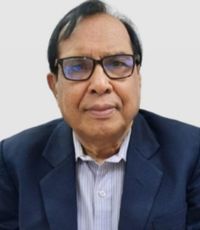
Professor Ganapati Panda
FNAE, FNASc, FIET(UK)

Title of the Talk: ” Application of Federated Learning and Edge Computing in the Advanced Communication Era”.

Biography :Professor Ganapati Panda is currently working as a Professor and Research Advisor at C V Raman Global University-Odisha, Bhubaneswar, India. Professor Panda served as the Deputy Director, Dean (Academic Affairs), and Head, School of Electrical Sciences at the Indian Institute of Technology, Bhubaneswar. He was also Dean (Administration), Head of Electronics and Communication Engineering at the National Institute of Technology, Rourkela. He was a member of the Board of Governors of IIT Bhubaneswar and NIT Rourkela. Dr. Panda also served as Director of the National Institute of Technology, Jamshedpur. He worked for 48 years in teaching and research in leading technical institutions in India. He did his post-doctoral research work at the University of Edinburgh, UK (1984-86), and Ph. D. (1981) from IIT, Kharagpur in Digital Signal Processing. He has guided 46 Ph. Ds in the field of Signal Processing, Communication, Artificial Intelligence, and Machine Learning and currently twenty-three more Ph.D. students are continuing their Ph.D. work under his active guidance. He has published more than 500 research papers in 300 referred Journals and 200 Conferences with 15262 citations, h-index of 59, and i10-index of 228 as of 28th May 2025.
He has successfully completed a number of research projects from various funding agencies in India and other countries. Dr. Panda has been nominated as Fellow of the National Academy of Engineering, India (FNAE) and a Fellow of the National Academy of Science, India (FNASc), Fellow of (AAIA) for his significant research contribution to signal processing and machine learning.

He has received Samanta Chandra Sekhar Award (1993), Biju Patnaik Award (2012), INAE-Outstanding Teacher Award (2017), AICTE-INAE Distinguished Visiting Professorship (2019-20), and AICTE- Margadarshak (2019-20), Life Time Achievement Award (2021), Senior Scientist (Odisha Bigyan Academy 2021), Vidyasagar Award (2024), listed under Top 2% Scientist of the world from the Stanford University in the area of AI&ML (2021,2022,2023, 2024) for his significant contributions to Engineering education, and Research. His name is included in the Technology Advisory Board of the Centre for Development of Telematics (C-DOT), Govt. of India in March 2022. Prof. Panda is listed as one of the World’s Best Computer Science Scientist in India by the Microsoft Academic Graph in the year 2022 with a national rank of 33. Name of Prof. Ganapati Panda has appeared in the list of Best Scientist in the category of Electronics and Electrical Engineering and Computer Science Engineering of India having National Rank as 19 and 26 (D-index as 49 and 55) respectively Released by Research.com on 10th April 2025. He is the only computer scientist from Odisha to be recognized on the list.

He is a Senior Member of IEEE, Fellow of IET, Fellow of IETE, Fellow of IE, Life Member of CSI, Life Member of ISTE, and a Life Member of System Society. He has chaired and delivered keynote addresses at many International Conferences in India and abroad. His research interests are in the areas of Artificial Intelligence, Machine Learning, Digital Signal Processing, Digital Communication, and Intelligent Instrumentation

Dr. Tapas Chakravarty,

Chief Scientist, TCS Research, Kolkata
Ph : 9231000286
[email protected]

Title: Future of Sensing

Abstract : This talk provides an overview of the evolving landscape of sensing technologies and their growing importance across scientific and industrial domains. We will outline the fundamental features of modern sensing techniques, including advances in sensitivity, accuracy, and integration with artificial intelligence. The presentation highlights how new sensor modalities such as nanosensors, quantum sensors, and non-invasive imaging, are expanding the boundaries of what can be measured and monitored. Key needs addressed include improving reliability, portability, and energy efficiency, while overcoming challenges related to cost and complexity. Rather than focusing on technical specifics, this session aims to give a broad perspective on how sensing innovations are shaping the future, enabling smarter systems and deeper insights into our environment, health, and materials. The goal is to spark discussion on opportunities and practical considerations for adopting next-generation sensing solutions.
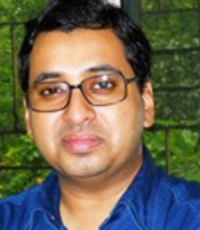
Short Biography : Dr. Tapas Chakravarty is the Chief Scientist at TCS Research in Kolkata, specializing in Embedded Devices and Intelligent Systems. He received his Ph.D. in Science from Jadavpur University and brings over 36 years of extensive experience in leading and executing R&D projects in embedded systems.

Dr. Chakravarty began his career as a Scientific Officer at SAMEER, a premier research institution under MeitY, Government of India, and later held academic positions at various engineering colleges and universities. Since joining TCS Research in 2007, his work has spanned sensor design, RF/microwave systems, Radars, Metamaterial and statistical analysis etc. He leads the ‘Sensing and Communication’ laboratory.

He has authored nearly 170 publications in international journals and conferences, co-authored a book, and holds around 190 granted patents. Dr. Chakravarty has also supervised Ph.D. research at Jadavpur University and has served as examiners for multiple doctoral theses.

He was honoured with the Distinguished Scientist award by TCS Research in 2021. He serves on the Board of Studies at institutions including NIT Andhra, NIT Meghalaya, Heritage Institute of Technology, and IIEST, and is a Senior Member of IEEE (USA).

Dr. Rowdra Ghatak

Title of the Talk:  “Technology Paradigms for Next Generation Wireless Communication Systems“.

Abstract:  The foundation for next-generation communication systems is being built upon a set of disruptive technology paradigms that move beyond the incremental enhancements of previous communication systems. This keynote provides a comprehensive overview of these core paradigms, which collectively aim to address the future requirements for ever expanding spectrum exploration and farrago of use cases to enable the technology enhancements. The synthesis of these paradigms is fundamental to realizing the vision of a truly intelligent, ubiquitous, and efficient next-generation communication ecosystem.
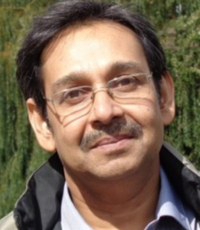
is an academician and striving researcher having interest in microwave circuits and antenna design as well as computational electromagnetics. He holds a Faculty position in the Deptt of ECE of NIT Durgapur, WB, INDIA.

Debatosh Guha

Recipient J C BOSE GRANT (FKA J C Bose Fellow),  GOVT OF  INDIA
E-mail: [email protected]

Title of the Talk: Machine Learning and Artificial Intelligence: are your innovation & profession in crisis ?

Abstract: The rapid evolution of Machine Learning (ML) and Artificial Intelligence (AI) has revolutionized innovation, automation, and decision-making across industries.Yet, this very pace of advancement has sparked concerns that both the innovation ecosystem and professional landscape in AI and ML may be approaching a crisis point.On one hand,breakthroughs in generative AI, large language models, and autonomous systems are accelerating innovation beyond traditional human-centric control. On the other, ethical dilemmas, data biases, job displacement, and skill obsolescence threaten the sustainability of the profession itself. This paper critically examines whether ML and AI are truly in crisis — or merely undergoing a necessary transformation. It explores the imbalance between rapid technological progress and the slower adaptation of human, ethical, and institutional frameworks. Finally, it argues that the future of AI innovation depends not only on smarter algorithms but also on responsible governance, interdisciplinary education, and human–machine collaboration that sustains creativity and trust in the age of intelligent automation.

Debatosh Guha is a Professor in Radio Physics and Electronics, University of Calcutta. He is the former HAL Chair Professor of IIT Khargapur and present Head of the Radio Physics and Electronics Department, and Director of  the Centre for Research in Nanoscience and Nanotechnology (CRNN), Calcutta University. He received the B.Tech. and M.Tech. degrees from the University of Calcutta in 1987 and 1989, respectively and started his career in a Wireless Industry. After graduating with a Ph. D. in microwave engineering from Calcutta University, he joined the same institute as an Assistant Professor in 1994. He spent about two years with the Royal Military College of Canada, Kingston, Ontario as Visiting Research Professor.

He has researched in developing microstrip and dielectric resonator antenna technologies. Defected Ground Structure (DGS) -inspired antenna is one of his major areas of contribution. He has published over 200 technical papers and articles in top Journals and Conferences along with a Book on microstrip and printed antennas from Wiley, UK.

He is the Recipient J C BOSE GRANT (FKA J C Bose Fellow),  GOVT OF  INDIA.

Professor Guha is also a Fellow of IEEE, the Indian National Academy of Engineering (INAE), National Academy of Sciences, Indian (NASI), West Bengal Academy of Science and Technology (WAST), and the Institution of Electronics and Telecommunication Engineers (IETE). He is the recipient of some notable awards which include IETE Ram Lal Wadhwa Award 2016 (New Delhi), Raj Mittra Travel Grant Award 2012 (Chicago); URSI Young Scientist Award 1996 (Lille, France); and Jawaharlal Nehru Memorial Fund Prize 1984 (New Delhi). He is Associate Editor of  IEEE AP Transactions and IEEE AWPL.

He is present Chair for Commission B of the Indian National Committee for URSI (INCURSI). He served the IEEE Kolkata Section as a Chair (2013-2014) and also the AP-MTT local Chapter as its Founding Chair (2004) and Chair (2010-2011). He has mentored more than a dozen doctoral students  and his current research interests include defected ground structure (DGS) for antenna application, unresolved issues of microstrip antenna design, UWB hybrid antennas, unconventional radiating modes and new feed concepts for dielectric resonator antennas.

Soumya P. Dash

Title of the Talk: Beyond 5G Communications: A Physical Layer Perspective

Biography: Soumya P. Dash received the B.Tech. (H) degree in electrical engineering from the Indian Institute of Technology, Bhubaneswar, in 2014, and the Ph.D. degree in electrical engineering from the Indian Institute of Technology, Delhi, in 2019. From January 2019 to March 2019, he was an Early-Doctoral Research Fellow with the Department of Electrical Engineering, Indian Institute of Technology Delhi. Since March 2019, he has been with the faculty of the School of Electrical and Computer Sciences, Indian Institute of Technology Bhubaneswar, where he is currently an Assistant Professor. His research interests include communication theory for hybrid communication systems, power line communications, smart grid communications, next-generation wireless communication systems, reconfigurable intelligent surfaces, quantum communications, visible light communications, and diversity combining.

He is a Senior Member of the IEEE and the IEEE Communications and Vehicular Technology Societies. He is a Young Associate of the Indian National Academy of Engineering (INAE) and is the recipient of the Odisha Young Scientist Award, VDGOOD Young Scientist Award, and the President of India Gold Medal for the academic year 2013-14 for obtaining the highest CGPA amongst the students graduating with B.Tech. (H) degree from the Indian Institute of Technology Bhubaneswar. He currently serves as an Editor for IEEE Transactions on Communications and an Associate Editor for Wireless Personal Communications.